

Why Do I Keep Waking Up at 3 AM?
By My Wellness Chapter
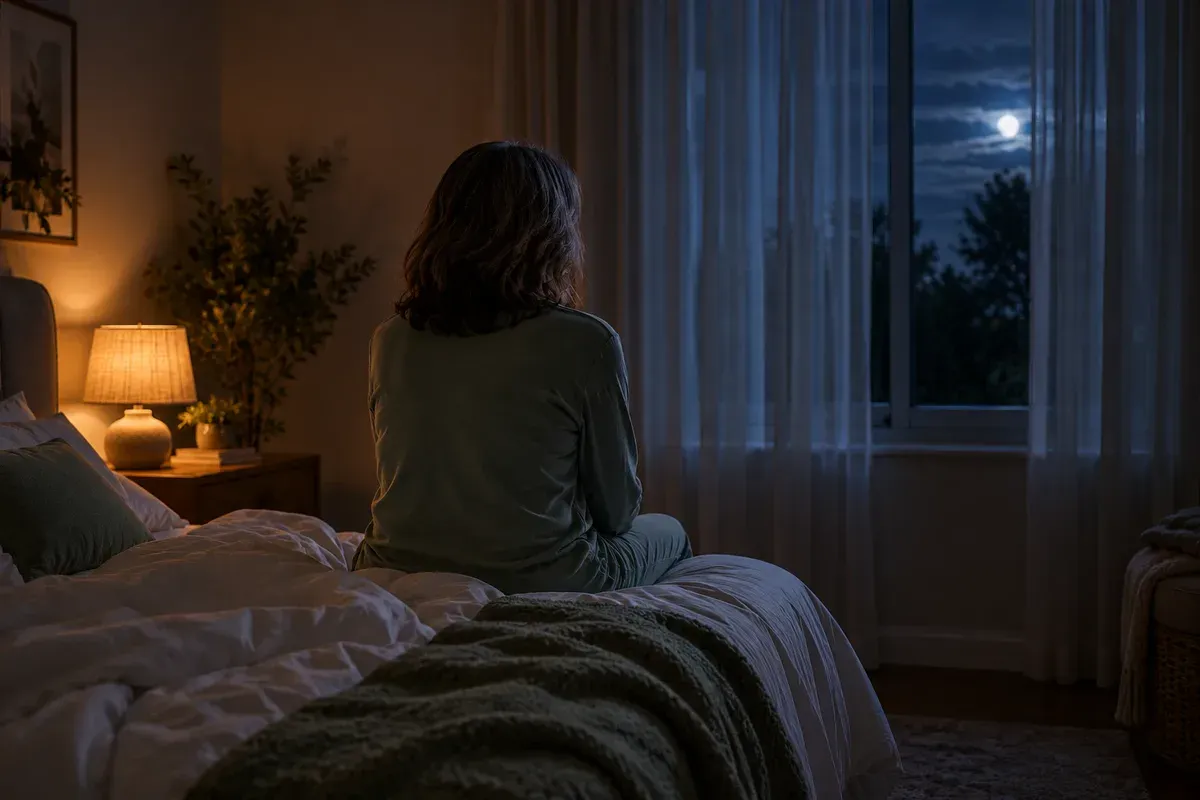
You fall asleep without much trouble. Then, sometime in the middle of the night, you're suddenly awake. You look at the clock: 3:07 AM. Your body feels tired, but your mind is already busy with tomorrow.
If this sounds familiar, there are real reasons it happens, and most of them have nothing to do with willpower or "bad sleep habits." Understanding them is the first step to changing your nights.
You're far from the only one
In a large U.S. national health survey, more than one in three postmenopausal women aged 40 to 59 said they had trouble staying asleep at least four nights a week. Among women who had not yet reached menopause, it was closer to one in four.
So waking in the night is common after 50. Common doesn't mean you have to accept it, but it does mean nothing is "wrong" with you.
What's actually happening at 3 AM
Your deepest sleep is already behind you
Sleep moves in cycles of roughly 90 minutes. Most of your deep sleep happens in the first half of the night. The second half is made up of lighter sleep and dreaming.
By 3 AM, you're in the lightest part of your night. Small things that wouldn't have woken you at midnight, such as a noise, a warm room or a full bladder, can now bring you to the surface. With age, deep sleep also becomes shorter, so this light phase arrives sooner.
Your "sleep pressure" has run down
The longer you stay awake during the day, the stronger your need for sleep becomes. That pressure is what helps you fall asleep quickly at bedtime.
After four or five hours of sleep, much of it has been used up. This is why falling asleep at 11 PM can feel easy, while falling back asleep at 3 AM feels so much harder.
Your body clock is running earlier
As we get older, the internal clock tends to shift earlier. You may feel sleepy earlier in the evening and wake earlier in the morning.
In the hours before your usual wake time, your body also starts preparing for the day: your temperature begins to rise and so do the hormones that make you alert. If your clock has moved earlier, that preparation can start in the middle of the night.
If you tend to wake at 4 or 5 AM and stay up for the day, read Why Do I Wake Up at 4 AM and Can't Go Back to Sleep?
Hormones and temperature
Around menopause, changing hormone levels can make it harder for the body to regulate its temperature. Hot flashes and night sweats are the obvious signs, but even a slight feeling of warmth can be enough to wake you when your sleep is already light.
If night sweats are what wake you, read How to Sleep With Night Sweats During Menopause.
The small things that tip the balance
None of these causes a 3 AM wake-up on its own. Together, they make one more likely.
Evening alcohol. It can help you fall asleep, but it tends to disrupt the second half of the night.
Late caffeine. It can stay in your system for many hours.
A warm bedroom. Heat matters more when sleep is light.
Stress. A busy day often shows up at 3 AM.
Bathroom trips. They are more frequent with age, and each one is a chance to become fully awake.
FREE 2-MINUTE QUIZ
Night waking is one of four common sleep patterns after 50.
Each one has different causes and needs a different approach. Find out which one is yours, and get a free guide made for your pattern.
Why is it so hard to fall back asleep?
Waking up isn't always the real problem. The difficult part is often what happens next.
You notice the time. Then you start calculating: "If I fall asleep right now, I can still get four hours." Then another thought appears: "What if I can't?" And suddenly, sleep becomes something you're trying to force.
The more you watch the clock and worry about tomorrow, the more alert you become. Your reaction to the wake-up matters as much as the wake-up itself.
For a step-by-step plan for those moments, read How to Get Back to Sleep After Waking Up at Night.
Why always at the same time?
If you wake at almost the same time every night, it's natural to wonder whether your body has "learned" it.
In most cases, the explanation is simpler. Your schedule, your sleep cycles and your habits are similar from one day to the next, so the lightest part of your night falls at about the same time. The useful question isn't "Why exactly 3 AM?" but "What is making my sleep lighter at that point?"
Start by noticing your pattern
Before changing ten things at once, observe your nights for a week. A few notes are enough:
What time you went to bed and got up
How many times you woke, and roughly when
Whether you woke feeling hot, thirsty or uncomfortable
Caffeine and alcohol, and at what time
How you felt the next day
Patterns that are invisible at 3 AM often become obvious on paper.
When to talk to your doctor
Speak with a healthcare professional if:
You wake at night at least three times a week, it has lasted three months or more, and it affects your days. Doctors call this chronic insomnia. The first treatment they recommend is usually a structured program called CBT-I, not sleeping pills.
You snore loudly, wake up gasping, or someone has noticed pauses in your breathing. These can be signs of sleep apnea, which becomes more common in women after menopause and is often missed.
Night sweats are waking you regularly.
Sleep after 50 needs a different approach, not more effort
Your body has changed, and so have your hormones, your routines and your responsibilities. That doesn't mean you have to accept being exhausted.
It means the strategies that worked years ago may not be the ones you need now. The first step is to understand your own pattern. The rest follows from there.
Sources & Further Reading
A Note About Your Health
This article is for general educational purposes only and is not medical advice. If you have persistent or severe sleep problems, or concerns about symptoms, medications, or other health conditions affecting your sleep, speak with a qualified healthcare professional.
Find the article that sounds like your nights

Why Do I Keep Waking Up at 3 AM?

How to Get Back to Sleep After Waking Up at Night

Why Am I Tired All Day but Wide Awake at Night?
Find the article that sounds like your nights
Why Do I Keep Waking Up at 3 AM?
Why it happens after 50, and how to make those wake-ups easier to manage.

How to Get Back to Sleep After Waking Up at Night
Simple ways to stay calm, avoid common sleep traps and drift back off.

Why Am I Tired All Day but Wide Awake at Night?
Why fatigue and alertness can happen together, and the habits that may help.
Ready to understand
your sleep?
Find your Sleep Type in 2 minutes and get a FREE guide made for your pattern.
Ready to understand your sleep?
Take the 2-minute quiz and get your free personalized guide.
© 2026 My Wellness Chapter. All rights reserved.
For educational purposes only, not medical advice.
Explore
About us
Contact
Learn
Free Sleep Guide
Quiz
Sleep Reset Program
Connect
Youtube
Legal
Privacy Policy
Terms & Conditions
Disclaimer
Explore
About us
Contact
Learn
Sleep Type Quiz
Sleep After 50
Waking Up at 3 AM
Connect
Youtube
Legal
Privacy Policy
Terms & Conditions
Disclaimer
© 2026 My Wellness Chapter. All rights reserved.
For educational purposes only, not medical advice.