

Why Do I Wake Up at 4 AM and Can't Go Back to Sleep?
By My Wellness Chapter
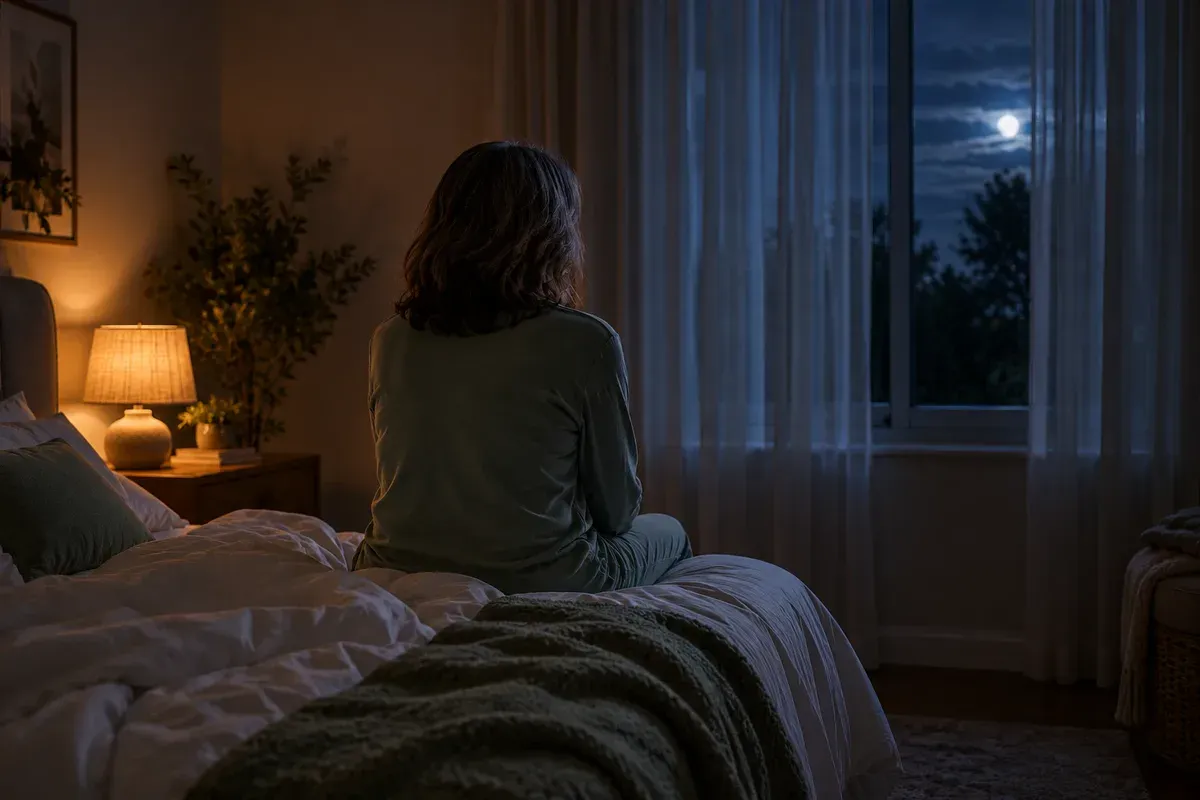
It's 4:30 AM. The house is quiet, everyone else is asleep, and you're wide awake. Not groggy. Not half-asleep. Awake, the way you'd be at 8 o'clock on a normal morning.
Last night, falling asleep was the easy part. By 9 PM, you could barely keep your eyes open. Maybe you even nodded off on the couch before you made it to bed.
Here's what most people miss: if you sleep from about 9:30 PM to 4:30 AM, you may already be getting around 7 hours. Your sleep may not be too short. It may simply be too early. And that changes what actually helps.
The short answer: if you wake at 4 or 5 AM, can't go back to sleep, and get sleepy early in the evening, your body clock may have shifted earlier. That's common after 50, and it often comes down to the timing of light.
Waking up too early? You're not the only one
Spend a few minutes in any online forum where women over 50 talk about sleep, and the same story keeps coming up. Wide awake at 4:30 or 5, every single morning. Going to bed later and still waking at the same time. Lying in bed feeling restless, then getting up because staying there feels worse. Some have simply decided that 4:30 is their new wake-up time, and they're not thrilled about it.
If that's you, it isn't a lack of discipline, and it isn't something you did wrong. For many people, it comes down to timing.
4 AM waking vs. 3 AM waking: not the same problem
The two can look alike, but they usually work differently.
3 AM waking happens in the middle of the night. You wake up, lie there for a while (sometimes a long while), and eventually drift back to sleep before morning. If that sounds more like you, read Why Do I Keep Waking Up at 3 AM?
4 AM waking (or 5 AM) feels different. Your night feels finished. You're not going back to sleep, so you get up for the day. And in the evening, you're sleepy much earlier than you'd like.
That second pattern, early to bed and early to wake, often points to one thing: your body clock.
FREE 2-MINUTE QUIZ
Our quiz looks at four common sleep patterns after 50.
Each one tends to have different causes and needs a different approach. Find out which one is yours, and get a free guide made for your pattern.
Why your body clock can shift earlier after 50
Your body runs on an internal clock, about 24 hours long, that decides when you feel sleepy and when you feel alert. It shapes more than your bedtime: your body temperature and the hormones that help you wake up in the morning follow it too.
With age, many people find that this clock shifts earlier. They get sleepy earlier in the evening and wake earlier in the morning. This shift is well documented in research on aging and sleep, and it's one of several ways sleep changes in midlife. You can read about the others in Why Is My Sleep Different After 50?
The main dial on that clock is light. Bright light in the morning tends to set it earlier. Bright light in the evening tends to set it later. Which brings us to a surprise.
The "healthy" habit that may be pushing it earlier
You've probably heard that morning sunlight is one of the best things you can do for your sleep. For many people, it is.
But think about what happens when you're already up at 4:30. You make coffee under bright kitchen lights. You head out for an early walk as the sun comes up. You sit on the porch at sunrise. All that bright light, so early in your day, tells your clock that morning is here, and it can nudge your clock even earlier.
Morning light isn't bad. When your clock is already running early, it's the timing that matters.
Light can work in the other direction, too. In a small pilot study, people who woke too early sat in front of a very bright light box for about four hours, two evenings in a row. Their average wake-up time moved from 4:59 to 6:11 AM. That was a special light box, not a living-room lamp, and only nine people took part. Sleep medicine guidelines still rate the evidence for evening light as limited. So think of light as a lever worth testing, not a guaranteed fix.
The early loop: how your evenings shape your mornings
Early waking rarely shows up on its own. It tends to come as a loop:
Bright light early in the day sets your clock earlier.
An earlier clock makes you sleepy early in the evening.
You doze on the couch at 8 PM, which takes the edge off your need for sleep.
You go to bed, sleep through the night, and wake at 4:30.
Each step can feed the next and keep your whole day running ahead of schedule. The good news is that you can break the loop at more than one point.
Why simply going to bed later often doesn't work
The obvious fix is to stay up later. Many women try it, and many find that it makes no difference: whatever time they go to bed, they still wake at 4:30.
That's because your bedtime isn't what sets your wake-up time. Your clock does. If you push your bedtime from 9 to 11 PM overnight, your clock may still wake you at 4:30, and you simply end up with two fewer hours of sleep.
What tends to work better is to move the clock first, starting with your mornings. Only then do you shift your bedtime later, in small steps. Your free Early Riser guide shows you how.
Start here: protect your mornings
Your first step is the simplest one, and you can start tomorrow morning.
1. Keep the light low for the first hour or two after you wake up. Use lamps instead of overhead lights, keep the blinds partly closed, and turn your screen brightness down.
2. Save bright light for later in the morning. Love your morning walk or your coffee outside? Keep it, just move it to mid-morning. If you need to go out early, wear sunglasses.
Bonus, if you can: get more light later in the day. If the sun is still up in the late afternoon or early evening, spend some time outside. If not, keep your evening rooms well lit.
The Sleep Health Foundation gives the same advice to people whose body clocks run early: avoid bright light in the first hours after waking. Give it a few weeks, not a few days. Your clock moves slowly, and results vary from person to person.
There are two more steps for Early Risers, one for naps and one for bedtime, and they work best once your mornings are on track. You'll find both in your free Early Riser guide when you take the quiz.
What to do when you wake at 4 AM
Feeling calm? Stay in bed in the dark and rest. Resting quietly is fine, even if sleep doesn't come back.
Getting up? Keep the lights low and your screens dim, and save going outside for later in the morning.
If you think you might drift back off, our step-by-step guide can help: How to Get Back to Sleep After Waking Up at Night.
When to talk to your doctor
For many people, early waking is simply about timing. But please talk to your doctor if:
It comes with low mood, losing interest in things you used to enjoy, or feeling at your worst in the morning. If you're having thoughts of harming yourself, call or text 988 (Suicide & Crisis Lifeline), any time.
You feel very sleepy during the day, or drowsy while driving.
You snore loudly, wake up gasping, or someone has noticed pauses in your breathing. These can be signs of sleep apnea.
Nothing has changed after several weeks of trying.
Thinking about a light therapy lamp or melatonin? Ask your doctor first. Light boxes aren't right for everyone. And with melatonin, timing matters a lot: taken at the wrong time of day, it can shift your clock even earlier.
Your sleep isn't broken. It's early.
Waking at 4 AM can make it feel like your sleep is falling apart. Often, it's simply running ahead of schedule. That's not something to fix with more effort or another supplement. It's something to nudge back, gently, starting with the light in your mornings.
The first step is finding out if you're an Early Riser.
Sources & Further Reading
A Note About Your Health
This article is for general educational purposes only and is not medical advice. If you have persistent or severe sleep problems, or concerns about symptoms, medications, or other health conditions affecting your sleep, speak with a qualified healthcare professional.
Find the article that sounds like your nights

Why Do I Keep Waking Up at 3 AM?

How to Get Back to Sleep After Waking Up at Night

Why Am I Tired All Day but Wide Awake at Night?
Find the article that sounds like your nights
Why Do I Keep Waking Up at 3 AM?
Why it happens after 50, and how to make those wake-ups easier to manage.

How to Get Back to Sleep After Waking Up at Night
Simple ways to stay calm, avoid common sleep traps and drift back off.

Why Am I Tired All Day but Wide Awake at Night?
Why fatigue and alertness can happen together, and the habits that may help.
Ready to understand
your sleep?
Find your Sleep Type in 2 minutes and get a FREE guide made for your pattern.
Ready to understand your sleep?
Take the 2-minute quiz and get your free personalized guide.
© 2026 My Wellness Chapter. All rights reserved.
For educational purposes only, not medical advice.
Explore
About us
Contact
Learn
Free Sleep Guide
Quiz
Sleep Reset Program
Connect
Youtube
Legal
Privacy Policy
Terms & Conditions
Disclaimer
Explore
About us
Contact
Learn
Sleep Type Quiz
Sleep After 50
Waking Up at 3 AM
Connect
Youtube
Legal
Privacy Policy
Terms & Conditions
Disclaimer
© 2026 My Wellness Chapter. All rights reserved.
For educational purposes only, not medical advice.