

Why Am I Tired All Day but Wide Awake at Night?
By My Wellness Chapter
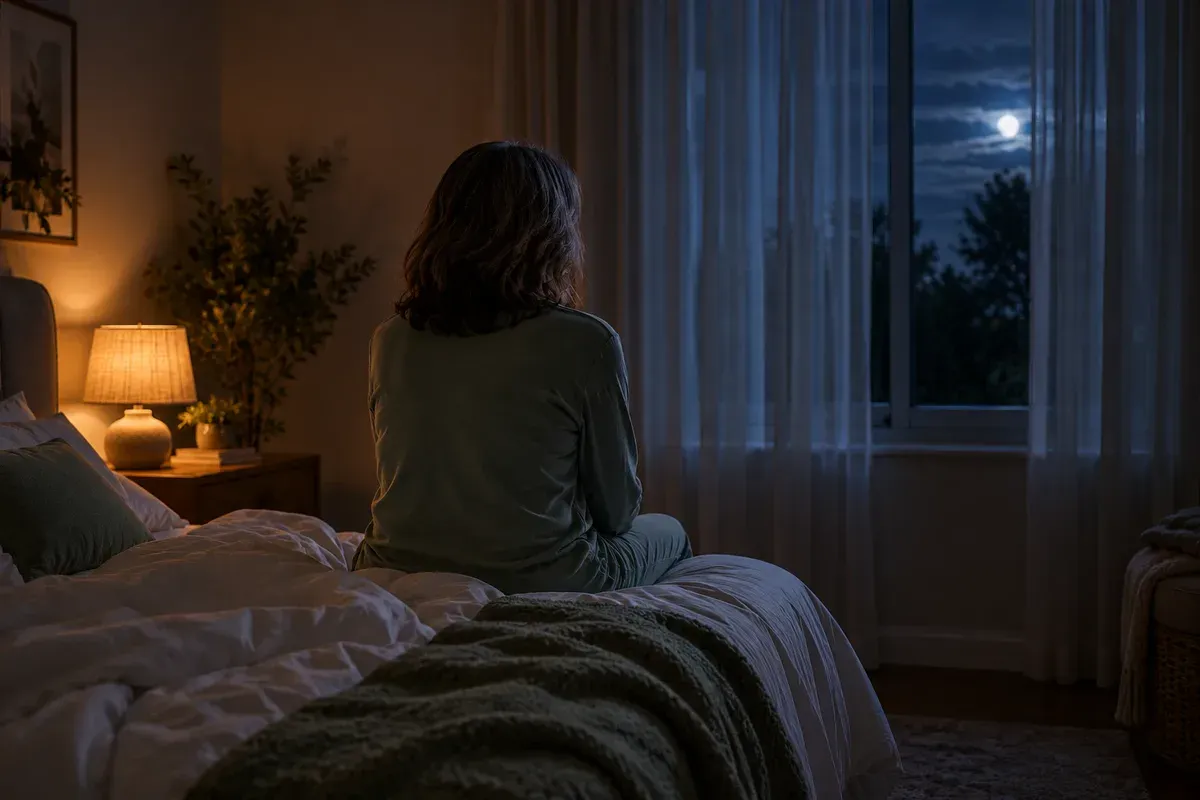
By 9 PM, you can barely keep your eyes open on the sofa. Then you get into bed, and something switches on. Your thoughts start running, your body feels restless, and the sleep you were longing for an hour ago seems to have disappeared.
This "tired but wired" feeling is one of the most frustrating sleep patterns after 50. It isn't in your head, and it isn't a lack of willpower. There are real reasons it happens, and they point to a different approach than simply trying harder to relax.
Tired and sleepy are not the same thing
This is the key to the whole pattern.
Tired means worn out: low energy, heavy limbs, no motivation. Sleepy means your body is actually ready to fall asleep: heavy eyelids, nodding off, losing track of what you're reading.
You can be exhausted all day without being sleepy at night. And if you go to bed tired but not sleepy, you're likely to lie there awake, which is exactly when your mind starts to run. That's why the American Academy of Sleep Medicine advises going to bed only when you're sleepy, not just when you're tired or when the clock says it's time.
What keeps you "wired" at night
Your mind finally has room to think
During the day, you're busy. Problems wait in line. Then the house goes quiet, the lights go off, and everything you didn't have time to think about comes back at once: tomorrow's appointments, a family worry, something someone said.
Your bed has become a place for thinking
If you've spent many nights lying awake, your brain can start to link the bed with being awake. Getting into bed then becomes the cue for alertness rather than sleep. This is why sleep specialists recommend using the bed only for sleep and getting up when you can't sleep, instead of lying there trying.
The evening "second wind"
Many people notice a burst of alertness late in the evening, often after pushing past an earlier wave of sleepiness. You were drowsy at 9 PM, stayed up "because it's too early," and by 11 PM you're wide awake. When you feel that first wave of real sleepiness, it's often worth listening to it.
Light and screens before bed
Bright lights, phones, tablets and emotionally engaging TV all keep the brain in "daytime mode." The American Academy of Sleep Medicine recommends limiting bright light in the evening and turning off electronic devices at least 30 minutes before bed.
Broken nights make tired days
Around and after menopause, night sweats and lighter sleep can interrupt the night several times. You may not remember every waking, but you feel it the next day. If night waking is part of your pattern, read Why Do I Keep Waking Up at 3 AM?.
How tired days can keep the cycle going
When you're exhausted, it's natural to try to make up for it: a long afternoon nap, an extra coffee, sleeping in after a bad night.
Each one makes sense in the moment. But together, they reduce your body's natural need for sleep by bedtime, which makes falling asleep harder, which makes the next day more tiring. The way out isn't to sleep more at any cost. It's to give your body a steady rhythm again.
FREE 2-MINUTE QUIZ
A busy mind at night is its own sleep pattern.
It has different causes from waking at 3 AM or waking too early, and it needs a different approach. Find your Sleep Type and get a free guide made for your pattern.
What to do in the evening
Give your worries an earlier time slot
Earlier in the evening, well before bed, take 10 to 15 minutes with a notebook. Write down what's on your mind and, for each item, one small next step. When the same thoughts come back at bedtime, you can remind yourself: "It's written down. I'll deal with it tomorrow."
Create a buffer before bed
Give yourself 30 to 60 minutes to slow down: lower the lights, put your phone away, and do the same calm things in the same order each night, such as a warm shower, a few pages of a book or quiet music. A routine you repeat becomes a signal your body learns to recognize.
Go to bed when you're sleepy, not just tired
Watch for real signs of sleepiness: your eyes closing, rereading the same line, nodding off. If you're tired but not sleepy, stay up a little longer and keep it calm and dim.
If your mind races in bed, don't stay and fight it
If you've been lying awake for what feels like about 20 minutes, get up, go somewhere dim and quiet, and return when you feel sleepy. For a step-by-step plan, read How to Get Back to Sleep After Waking Up at Night.
What to do during the day
Get up at the same time every day, even after a bad night. It's one of the most effective ways to steady your body clock.
Move regularly. A walk, gardening or stretching all count. The National Institute on Aging notes that regular physical activity can improve sleep and boost energy.
Keep coffee to the morning. Caffeine in the afternoon or evening can still affect your sleep at night.
Keep naps short and early, or skip them for a while. Late-afternoon naps can make it harder to fall asleep at night.
When tiredness is a sign to see a doctor
Feeling tired now and then is normal. But the National Institute on Aging recommends seeing a doctor if you've felt tired continuously for several weeks.
Fatigue can have many causes beyond sleep habits, including sleep apnea and other sleep disorders, thyroid problems, anemia, some medications, anxiety and depression. Sleep apnea in particular becomes more common in women after menopause. Mention loud snoring, waking up gasping, or morning headaches to your doctor.
Start with one evening
You don't need to change everything at once. For the next week, try just two things: write down your worries earlier in the evening, and go to bed only when you're truly sleepy.
Notice what changes. Understanding your own pattern is the first step. The right next steps follow from there.
Sources & Further Reading
A Note About Your Health
This article is for general educational purposes only and is not medical advice. Persistent or severe fatigue, excessive daytime sleepiness, or ongoing sleep problems should be discussed with a qualified healthcare professional.
Find the article that sounds like your nights

Why Do I Keep Waking Up at 3 AM?

How to Get Back to Sleep After Waking Up at Night

Why Am I Tired All Day but Wide Awake at Night?
Find the article that sounds like your nights
Why Do I Keep Waking Up at 3 AM?
Why it happens after 50, and how to make those wake-ups easier to manage.

How to Get Back to Sleep After Waking Up at Night
Simple ways to stay calm, avoid common sleep traps and drift back off.

Why Am I Tired All Day but Wide Awake at Night?
Why fatigue and alertness can happen together, and the habits that may help.
Ready to understand
your sleep?
Find your Sleep Type in 2 minutes and get a FREE guide made for your pattern.
Ready to understand your sleep?
Take the 2-minute quiz and get your free personalized guide.
© 2026 My Wellness Chapter. All rights reserved.
For educational purposes only, not medical advice.
Explore
About us
Contact
Learn
Free Sleep Guide
Quiz
Sleep Reset Program
Connect
Youtube
Legal
Privacy Policy
Terms & Conditions
Disclaimer
Explore
About us
Contact
Learn
Sleep Type Quiz
Sleep After 50
Waking Up at 3 AM
Connect
Youtube
Legal
Privacy Policy
Terms & Conditions
Disclaimer
© 2026 My Wellness Chapter. All rights reserved.
For educational purposes only, not medical advice.